
Tips & Advice
How HMRC’s Focus On Private Use Adjustments Affects Your Tax Return
Published: 04 October 2025
Reading time: ~4 minutes

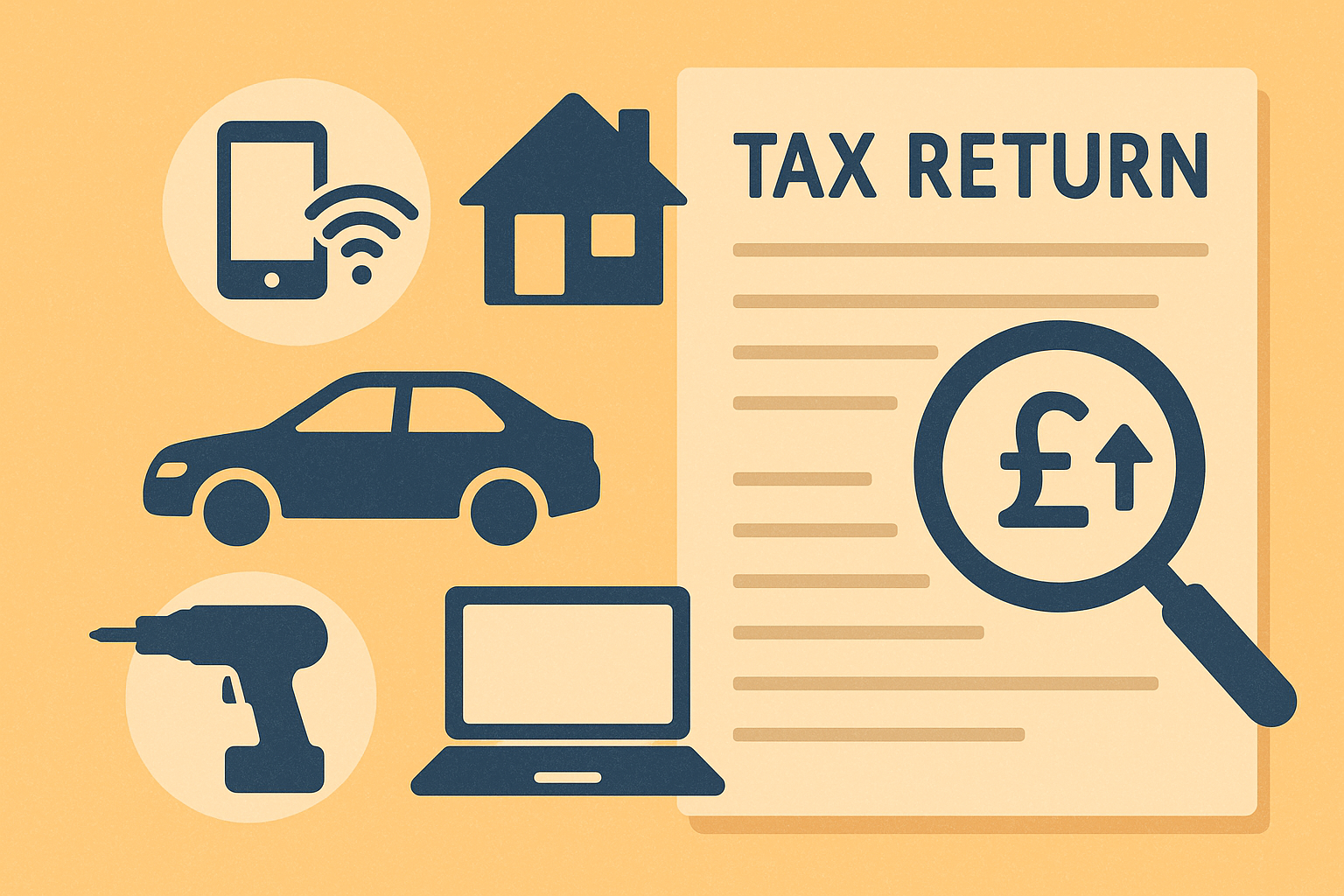
HMRC Targets Private Use Adjustments In Self Assessment
HMRC say they raised over £27 million following a 2024 trial encouraging more accurate private-use adjustments, exposing widespread claims of disallowable private use within business expenses.
Private use adjustments are now a clear compliance focus for HMRC, with more enquiries expected. The Chartered Institute of Tax (CIOT) says that HMRC are looking at private use adjustments in business expenses by running a digital campaign to highlight problems with reporting these adjustments in tax returns.
What Is A Private Use Adjustment?
If an expense or asset is used for both business and personal reasons, you must restrict the deduction so only the business part is claimed.
HMRC’s guidance on allowable costs for the self-employed stresses business-only claims, with apportionment where an identifiable business share exists, such as cars or home running costs used partly for private purposes.
See HMRC’s guidance on expenses if you’re self-employed, and the Business Income Manual (BIM42115 onwards) on apportionment examples, which cover mixed-use costs like cars and home utilities.
Methods You Can Use
Work out the business part using a sensible, consistent method; for example, by time used, floor area, or mileage logs. For some costs you can use HMRC’s simplified expenses, such as the flat rate for working from home, which already builds in the private use adjustment so only the business share is claimed.
For capital allowances, where an asset has private use by a sole trader or partner, claims must be restricted so only the business proportion qualifies, including when claiming Annual Investment Allowance (AIA). HMRC’s Capital Allowances Manual confirms how private use affects claims and pools.
Why This Matters Now
HMRC view private use errors as a contributor to the small business tax gap. Expect prompts in your online return, requests for records, and more enquiries focused on private use.
Getting private use adjustments right reduces repayment risks, interest and penalties, and lowers the chance of a prolonged enquiry. If in doubt, keep it conservative and keep evidence.
Practical Examples
Phone and broadband. Apportion by itemised business calls plus a reasonable share of line rental, or by a time-based method if more appropriate.
Motor costs. Use either actual costs with a business-mileage percentage or HMRC’s approved mileage rates for cars and vans, but apply one method consistently per vehicle.
Home office. Use simplified expenses if eligible or apportion actual costs like heat, light and council tax based on rooms and time used for business.
Tools, computers and equipment. If partly for private use, restrict the deduction for running costs and restrict capital allowances to the business proportion.
What This Means For You
HMRC are paying attention. Build your claim from records that show how you calculated the business share. If your use pattern changes during the year, adjust your apportionment accordingly. Keep working papers in case HMRC ask.
Quick Checklist
-
Record the method you used to calculate private use.
-
Keep source evidence: mileage logs, bills, meter readings, room-use notes.
-
Apply the method consistently for the whole tax year.
-
Restrict capital allowances for any private use of assets.
-
Use simplified expenses where it gives a fair result and saves time.
-
Sense-check totals against your activity level before filing.
Where SCCS Accountants Can Help
We review your apportionments before filing, help you choose between actual costs and simplified expenses, and prepare clear working papers to support your position. If you receive an HMRC nudge or enquiry, we manage the response and keep things on track.
Explore our support for sole traders and partnerships, or get in touch for friendly, remote UK-wide help.
FAQs On Private Use Adjustments (UK)
Can You Claim AIA On Private Use Assets?
Yes, but you must restrict the claim to the business element if you are a sole trader or partner. Private use by proprietors means only the business proportion qualifies for allowances, including Annual Investment Allowance (AIA), with the balance disallowed for tax.
What Records Should I Keep For Private Use Calculations?
What Is The Personal Trading Allowance In The UK?
Individuals can have up to £1,000 gross trading income each tax year covered by the trading allowance. You can either use the £1,000 allowance or claim actual expenses, but not both for the same income stream.
How Can A Self-Employed Person Avoid Paying 40% Tax?
You cannot avoid the rate if your taxable income falls in that band, but you can manage taxable profits sensibly. Options include accurate expense claims, making pension contributions, and timing investments where appropriate. Check current bands on GOV.UK and plan ahead.
If you want your private use adjustments reviewed before you file, our team can help quickly and remotely across the UK. Share your draft figures and we will sense-check the method, tidy the workings, and file on time with minimal hassle. Start here: services for sole traders & partnerships.
Disclaimer
This article is provided for general informational purposes only and does not constitute tax, legal, accounting, or financial advice. The information is based on UK law and HMRC guidance as at the date of publication, but rules and interpretations may change. We do not accept any liability for actions taken, or not taken, based on this content. Always seek tailored advice from SCCS Accountants before making financial or business decisions.